The citizen dialogs at KIT are central cases in which PaFo applies the impact matrix. They show how science and society interact with each other and which forms of impact can actually be observed. PaFo examines these cases empirically in order to trace the changes that participation can trigger - in questions, perspectives or organizational processes. The applications illustrate how complex impact processes are - and how the impact matrix makes changes visible at different levels.

Context of the applications
They create situations in which different perspectives come together and new questions become possible.
PaFo critically examines how such processes take place and what effects can be demonstrated at the level of the participants, the researchers and within KIT
- Where do epistemic impulses arise?
- Where do frameworks shift
- Where do social connections emerge - or fail to emerge
- What tensions or contradictions arise
The applications show real developments - productive, ambivalent and also ineffective. This makes it clear why an analytical - not normative - view of participation is necessary.
Between claim and practice: impact must be tested.

Citizen dialogues as use cases
Global turbulence, local involvement
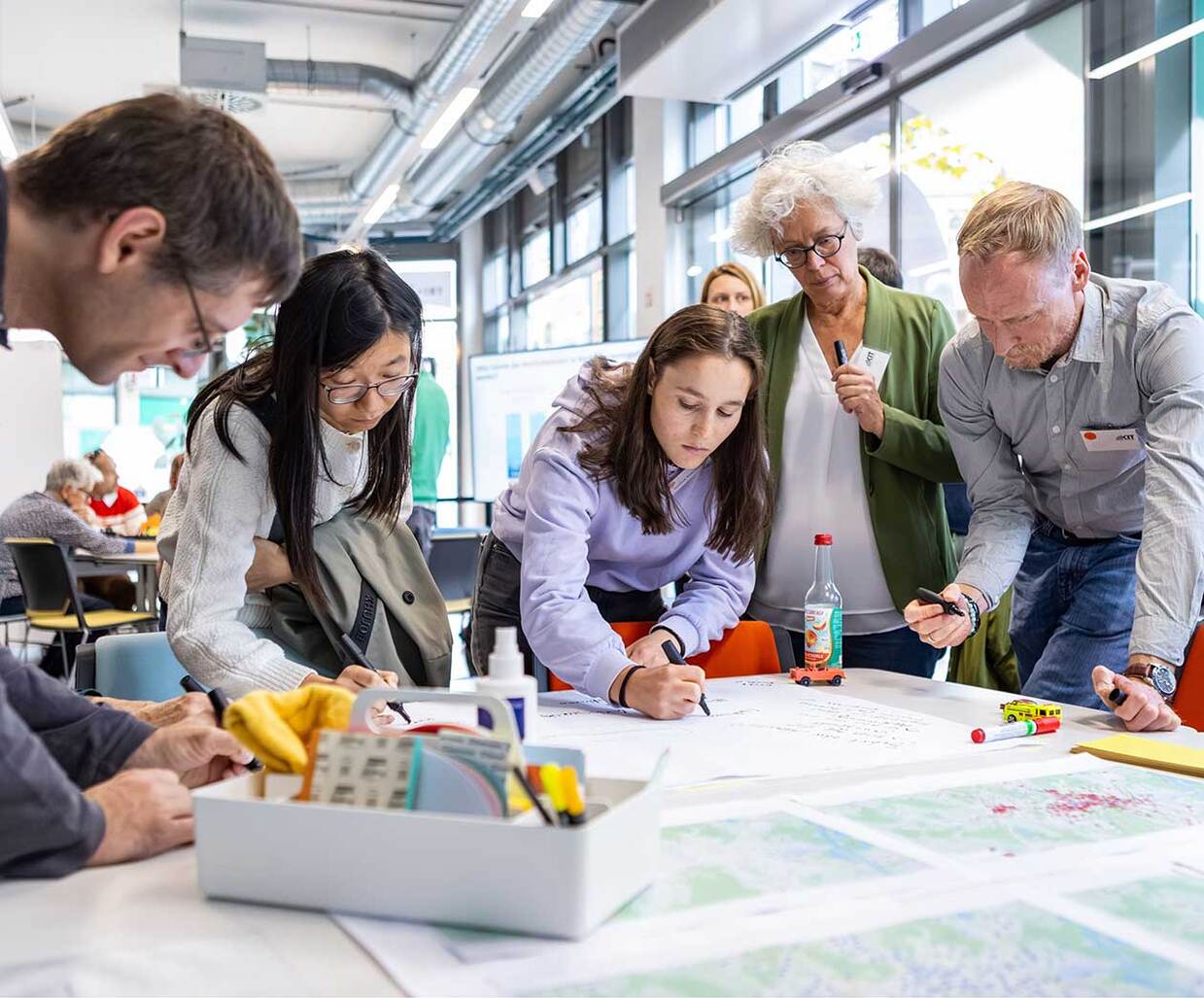
As part of the KIT Science Week 2025, citizens, researchers and representatives of the city of Karlsruhe discussed how the city can remain liveable in times of climate change, digitalization and social change - and what role KIT could play in this. New were preparatory events on heat protection, mobility and nutrition, the results of which were incorporated into the main dialog.
PaFo uses this dialogue to analyze the impact matrix to determine what impulses participation triggers - and where limits remain visible.
Climate protection that pays off?
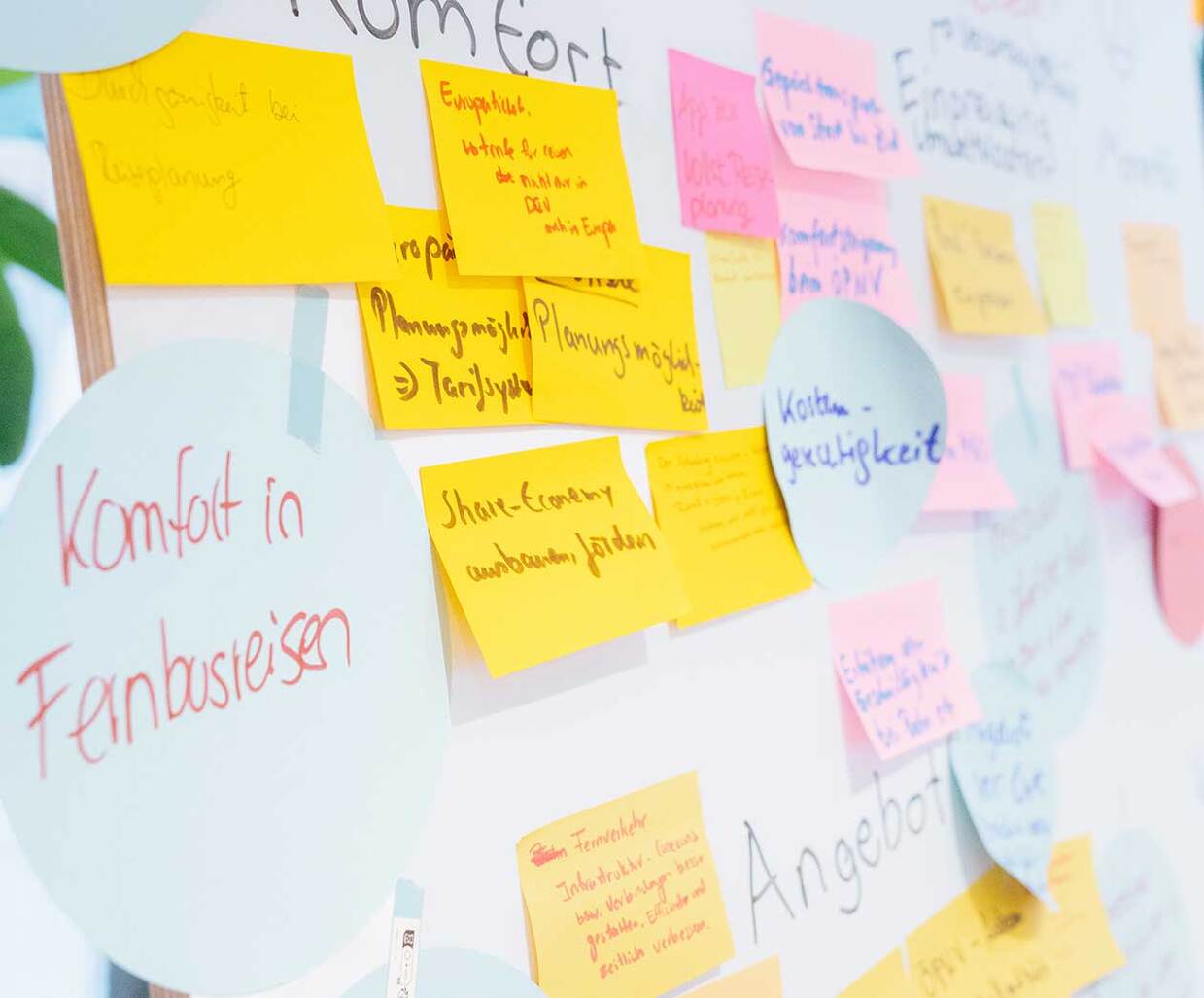
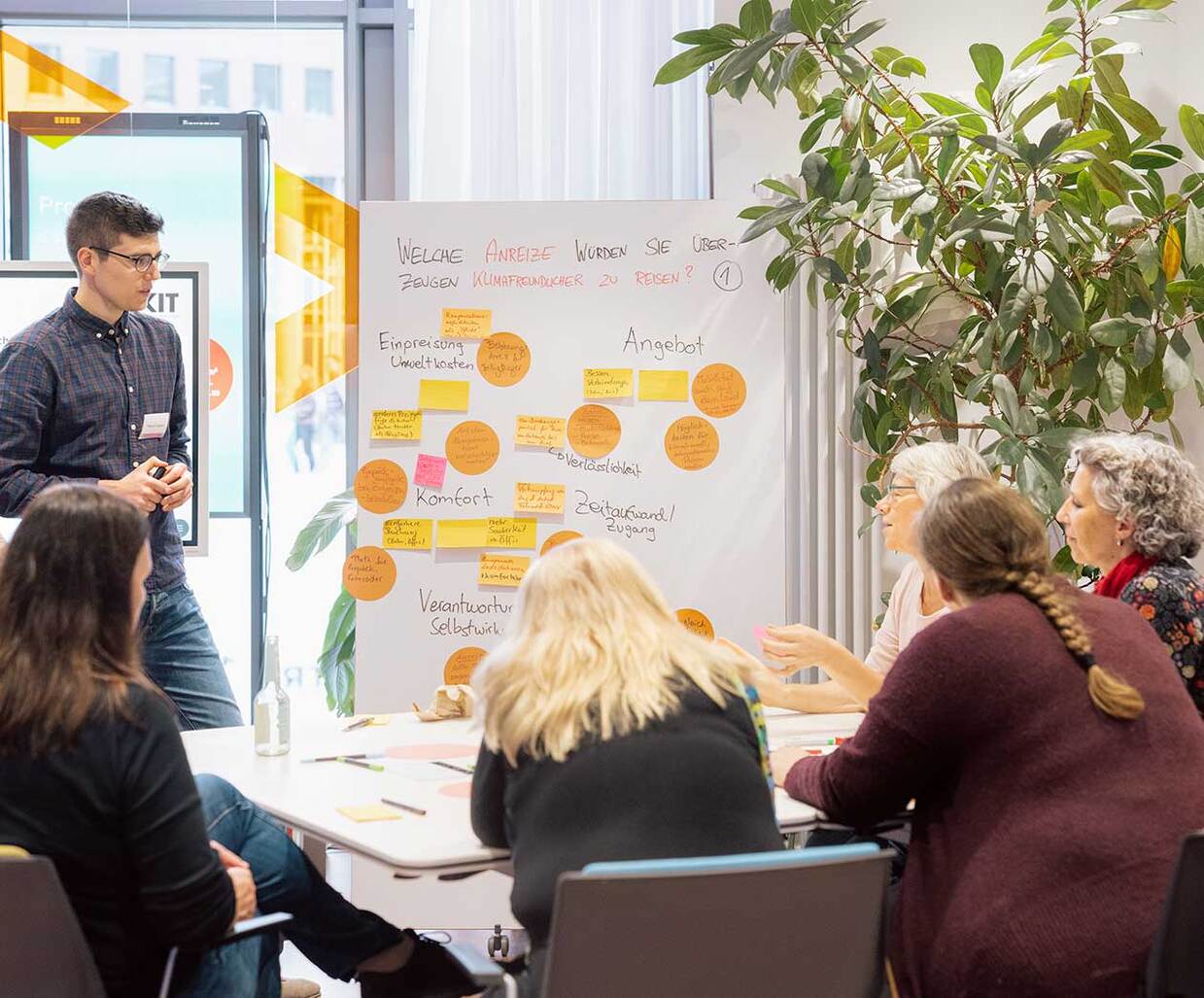
2023, over 30 participants discussed with researchers what incentives could persuade people to act in a more climate-friendly way - for example when traveling, heating or using renewable technologies. Obstacles, incentives and possible research topics for KIT were collected in table formats, from real-world laboratories to digital city models.
PaFo uses the impact matrix to examine which changes can be seen at the impact levels - and where participation remains without recognizable consequences.
Expectations of science in times of crisis
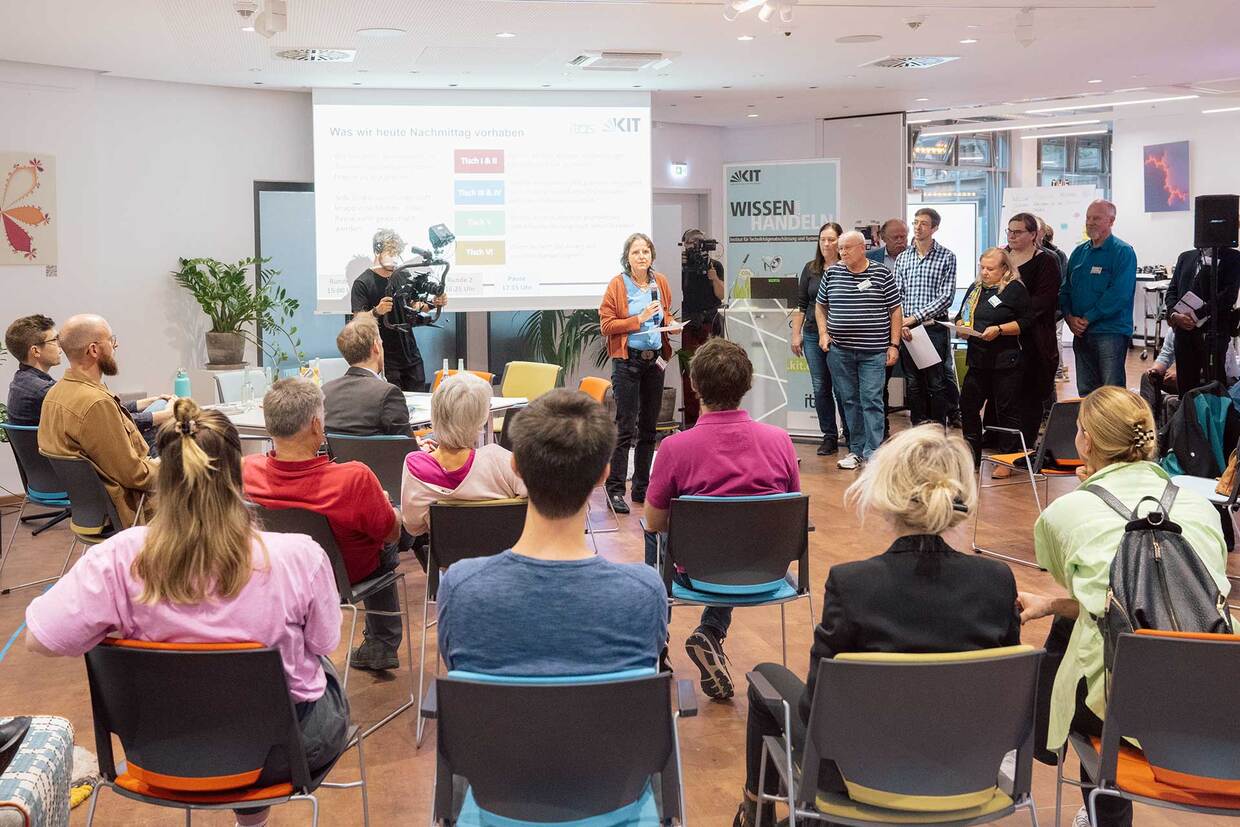
The Citizens' Dialogue 2022 focused on the role of science in crises such as the climate, coronavirus and energy crises. It discussed what expectations citizens have of researchers, how trust is created or becomes fragile and what tensions arise.
PaFo uses this application to analyse how such expectations and irritations shape the perception of research - and whether they have an impact on scientific questions or organizational processes.
Overarching findings
The analysis shows recurring patterns:
- The dialogs often reach rather homogeneous, academically oriented groups
- Discussions are committed, but less diverse than hoped for
- A more inclusive approach and broader public relations work would be necessary to involve new target groups
At the same time, it becomes clear which factors promote an equal exchange - such as discussion-oriented settings, clearly communicated content and strong moderation.
The involvement of the KIT management is perceived as a sign of appreciation, but can also create expectations that are not automatically fulfilled.
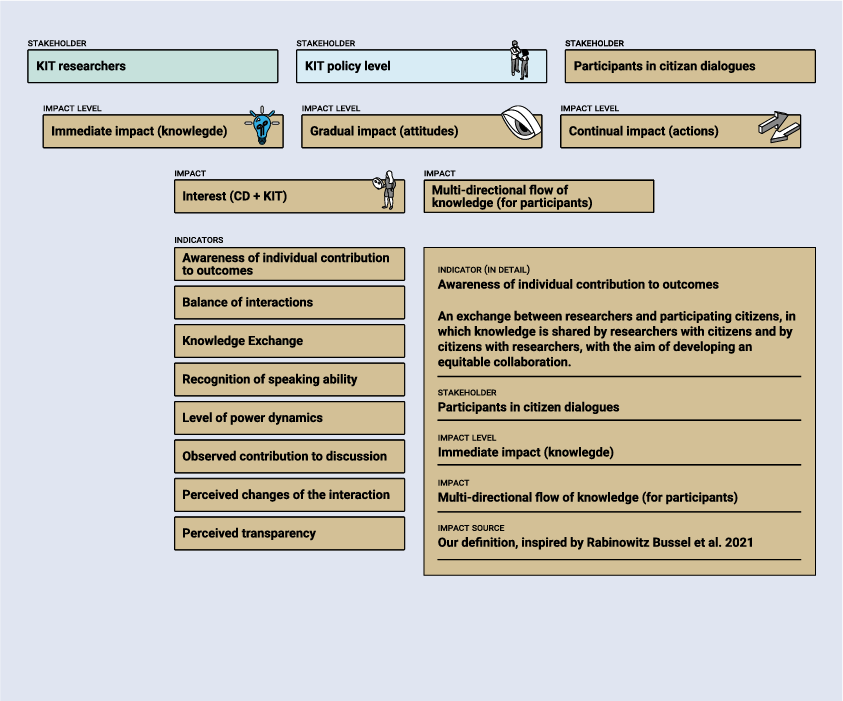
These three perspectives follow the logic of the impact matrix and show that participation works on different levels and often only unfolds over time.
What became visible
New topics, perspectives and questions.
What has changed
Adjustments in processes, new collaborations, shifts in problem definitions - if empirically verifiable.
What remains unanswered or went without consequence
No identifiable impact, contradictory effects, tensions or unclear developments.
Analytical depth
They show how participation can irritate, expand or legitimize research agendas - and where effects fail to materialize. PaFo uses these cases to understand how participation influences participants, researchers and KIT on the basis of the dimensions of impact.
Social input becomes strategically comprehensible here.